Introduction: In deployments for the Asia-Pacific and Southeast Asian markets, Singapore multi-IP cloud servers have become a common choice due to their low latency and flexible IP strategies. This article analyzes different specifications and typical business scenarios to help decision-makers formulate appropriate procurement plans.
Singapore nodes usually have excellent international and regional backbone interconnection, multi-exit bandwidth, and flexible public IP allocation strategies. In addition to basic computing and storage, the key to multi-IP cloud servers lies in the number of public network IPs, elastic bandwidth, and the impact of routing and NAT policies on the business.
Advertising, SEO and crawler businesses have high demand for multiple IPs. It is recommended to give priority to more public IPs and medium CPU and memory configurations, as well as stable export bandwidth and high concurrent connection limits, in order to disperse traffic and IP reputation management.
E-commerce and online transactions require high availability, low latency and data consistency. Priority should be given to higher CPU and memory, NVMe storage and redundant network paths, and at the same time, use a small number of fixed public IPs and load balancers to achieve session stability.
Static content and media distribution rely more on bandwidth and storage. Multi-IP has limited effect on CDN scenarios. It is recommended to output traffic through CDN nodes. The cloud server can choose lower computing, larger bandwidth and object storage to reduce costs and optimize latency.
Microservice architecture requires elastic scaling and network segmentation. It is recommended to use medium and high-specification instances with container or serverless strategies, equipped with sufficient network throughput and private network bandwidth, and multiple IPs to isolate different services or test environments.
Testing and grayscale environments often require a large amount of IP for concurrent simulation or multi-region backtracking. You can choose low-cost instances but pre-configure sufficient public IP and flexible bandwidth billing to facilitate short-term expansion and control long-term expenses.
Security and compliance will affect selection, such as the need for DDoS protection, intrusion detection and log auditing capabilities. High-risk businesses should give priority to solutions with network protection and compliance certification, and rationally allocate IPs between instances to reduce passive risks.
The latency performance from Singapore to China and Southeast Asia is excellent, but bandwidth peaks and export strategies still need to be paid attention to. Choose a service with high-quality backbone interconnection and multi-operator outlets, and use bandwidth packages or pay-as-you-go billing strategies to achieve a balance between cost and performance.
When purchasing, first clarify your business priorities: number of IPs, concurrent connections, storage type and bandwidth requirements. For outgoing and multi-IP dependent services, priority is given to IP and bandwidth, for computing-intensive services, CPU/memory and fast storage are increased, and private network isolation and load balancing are rationally used.
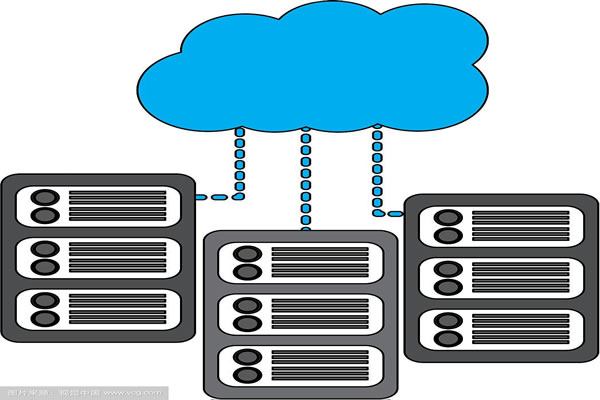
Summary: Singapore's multi-IP cloud server is suitable for multi-scenario deployment in Asia-Pacific. When formulating a purchase plan, make trade-offs based on business priorities (number of IPs, performance, bandwidth, and security). It is recommended to evaluate traffic and concurrency first, choose a configuration that can be flexibly expanded, and reserve protection and monitoring measures.
- Latest articles
- Alibaba Cloud Korean Lightweight Servers Are So Cheap. Feasibility Assessment In Cross-border Business
- Hong Kong Tokyo Vps Evaluation Report Bandwidth Stability And Packet Loss Rate Comparison Analysis
- Why Are More And More Enterprise-level Websites Choosing German Independent Servers To Ensure The Security Of Sensitive Data?
- How To Choose A Thai Cloud Server? Performance Test Indicators And Stress Test Points
- Detailed Steps For Setting Up Taiwan Native IP And Network Environment Preparation Strategy
- Analysis Of Korean Rental Server Selection And Protection Configuration From A Security Perspective
- Teach You Step By Step How To Configure Vietnam Vps Native IP To Achieve Stable Node Access
- How To Evaluate The Network Quality And Routing Stability Of Taiwan Server Two-way Cn2 Cloud Space
- Purchasing Recommendations: Matching Analysis Of Different Specifications Of Singapore Multi-IP Cloud Servers To Business Scenarios
- How To Achieve Cost Control To Achieve A Balance Between IP Quality And Price In Hong Kong Station Group IP Procurement
- Popular tags
-

How To Use Singapore Vps Native Ip To Unlock Disney And Other Overseas Content
this article introduces how to use the native ip of singapore vps to unlock disney and other overseas content, and provides professional operation guides and suggestions. -

Is Singapore’s Most Expensive Cloud Server Worth Investing In?
explore whether the most expensive cloud server in singapore is worth investing in, analyzing it from multiple aspects such as performance, stability and customer service. -

Will Singapore Vps Be Fined Due To Excessive Traffic?
discuss whether vps in singapore will be fined due to excessive traffic, analyze the traffic limits of vps services and how to avoid potential fines.